
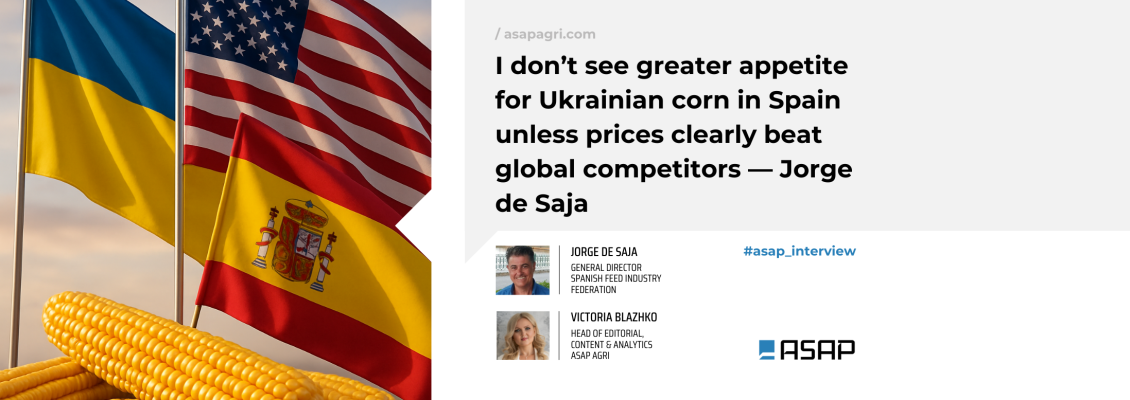
Протягом багатьох років Іспанія
була одним із найбільших покупців українського зерна та соняшникової олії в ЄС.
Саме тому для аграрної спільноти України критично важливо відстежувати
тенденції, що формують комбікормову галузь Іспанії — особливо зараз, коли ринок
змінюється: Аргентина тестує конкурентоспроможність завдяки тимчасовому
скасуванню експортного мита, США та Бразилія нарощують виробництво, а ЄС вкотре
відклав дію регламенту з протидії вирубці лісів (EUDR).
Щоб з’ясувати, що все це
означає для Іспанії і яке місце тут займає Україна, Вікторія Блажко, керівниця
відділу редакційного контенту та аналітики ASAP Agri, поспілкувалася з Хорхе де
Саха, генеральним директором Іспанської федерації комбікормової промисловості
(CESFAC). У відвертій розмові він пояснив, чому тимчасове скасування мит
Аргентиною може не сильно змінити закупівлі Іспанії, чому США залишаються
найсильнішим конкурентом України на ринку кукурудзи та чому іспанські
комбікормові заводи були неготові до EUDR.
Редакційна примітка: це інтерв’ю
було записано до того, як Аргентина 25 вересня знову запровадила експортні мита
на зернові та продукти їх переробки. Раніше, 22 вересня, мита були скасовані,
але відновлені після досягнення ліміту продажів у 7 млрд дол. США.
Вікторія Блажко: Хорхе, дуже дякую, що знайшли час для розмови. Дозвольте почати з останнього рішення Аргентини тимчасово скасувати експортні мита на зернові та олійні, що підвищує її конкурентоспроможність на світовому ринку, особливо в сегменті сої. Чи очікуєте ви, що цей крок матиме суттєвий вплив на попит Іспанії у короткостроковій перспективі?
Хорхе де Саха: Так і ні. Аргентина багато
експортує, але це не наш головний постачальник — і особливо не в той час року,
коли ми отримуємо південноамериканську сою.
Тож якби йшлося про США проти
Аргентини, це могло б мати більший ефект. Але факт у тому, що Аргентина
виходить на ринок одночасно з Бразилією, а Бразилія вже є нашим постачальником
№1. Саме тому не ясно, чи матиме це взагалі значний вплив.
Ситуація також змінилася після
оголошення Єврокомісії цього тижня [23 вересня] про відтермінування дії
регламенту EUDR до кінця 2026 року. Ми, звісно, вже давно чули з Брюсселя та
інших джерел, що рішення наближається — найімовірніше, відстрочка. Але поки
воно не стало офіційним, ніхто не міг бути впевненим на 100%.
Отож, якби міри Аргентини були
ухвалені кількома тижнями раніше, я впевнений, іспанські покупці проявили б
більше інтересу до аргентинських поставок, адже Аргентина — одна з небагатьох
країн, які реально працювали над тим, щоб знайти спосіб відповідати вимогам
EUDR.
Але зараз EUDR не є проблемою в
короткостроковій перспективі. Це не те, що впливає на рішення про закупівлю
сьогодні. Тому ми ще не знаємо, чи матиме аргентинське оголошення реальне
значення на практиці вже зараз.
Зверніть увагу і на інший
фактор: зараз дуже хороша доступність джерел протеїну — як на національному,
так і на міжнародному рівні. Звичайно, соя — це особливий інгредієнт: його
неможливо повністю замінити іншими білками з багатьох причин. Так, ми будемо
продовжувати купувати сою, але потреба вже не така нагальна, як у попередні
роки.
Найважливіше ж у тому, що через
попередню невизначеність навколо EUDR іспанська переробна промисловість
залишалася недостатньо законтрактованою на сою для початку 2026 року. Зазвичай на
цей час ми вже маємо заброньовано 15–20% потреб першого кварталу. Цього ж року
покриття залишалося дуже обмеженим.
У результаті, починаючи з цього
тижня [після підтвердження відстрочки EUDR], іспанська промисловість
повернулася на ринок. Вони зараз активно закривають програми на перший квартал
наступного року — чого раніше не робили. Це суттєвий зсув, але не через рішення
Аргентини. Це тому, що європейська переробка тепер знаходиться у фазі активних
закупівель сої, чого не було раніше. І це справжня відмінність.
Вікторія Блажко:
Оскільки ви вже зачепили EUDR та його відтермінування, дозвольте уточнити. Чи поділяють іспанські комбікормові заводи загальноєвропейське занепокоєння, що виконати вимоги EUDR у первісному графіку було практично неможливо? І наскільки краще підготовлений іспанський сектор після цього другого перенесення?
Хорхе де Саха: У цьому відношенні іспанська
комбікормова промисловість не відрізнялася від решти Європи. Ніхто не був
готовий — справді не готовий [до введення EUDR 31 грудня 2025 року]. Ми
підрахували, скільки соєвого шроту реально можна вважати таким, що не підпадає
під EUDR, або легко сертифікувати як такий, і наші розрахунки показали, що це
покривало б у кращому випадку 30% поточних потреб.
Тож так, і іспанська, і
європейська комбікормові галузі були надзвичайно занепокоєні. Якби регламент
набрав чинності вже 31 грудня [2025 року], просто не було б достатньо
“безпечної” сої на ринку. Ба більше, залишалося багато невирішених юридичних,
практичних та логістичних питань. Навіть якби ми хотіли дотриматися вимог, це
було б неможливо — або можливо лише для дуже невеликої частини поставок.
У цьому сенсі відстрочка — яка
була більш-менш очікуваною, але ніколи не гарантованою — стала полегшенням. Як
я вже казав, невизначеність і так уповільнила пропозиції та попит на сою на
міжнародному рівні.
Водночас я хочу наголосити, що
іспанська комбікормова промисловість уже багато років має власну стратегію
сталого розвитку — «Сталий розвиток-2030». Зокрема, вона передбачає скорочення
та зрештою повне вилучення сої, пов’язаної з вирубкою лісів, до 2030 року.
Тобто ми вже рухалися в цьому напрямку задовго до EUDR.
Ми повністю підтримуємо принцип
EUDR. Але правда в тому, що саме законодавство було дуже погано спроєктоване. З
боку Єврокомісії не було достатніх зусиль, щоб зробити його реально
застосовним. Відстрочка — це не лише полегшення, а й можливість змінити,
покращити й зменшити бюрократичний тягар цього регламенту.
Я вважаю, тепер у нас є шанс
створити закон, який досягне спільних цілей. Ми всі хочемо отримувати сою без
вирубки лісів. Насправді більшість нашої сої вже надходить із таких джерел. Але
сертифікація має бути реальною, застосовною на практиці й не додавати зайвих
витрат чи паперової тяганини для європейської промисловості та тваринництва.
Цього бракувало в EUDR у його
нинішньому вигляді. Це не було хорошим законодавством. Тепер головне —
використати цей додатковий час, щоб зробити його кращим.
Вікторія Блажко: Повернімося до Аргентини. Чи бачите ви її в найближчому майбутньому справжнім конкурентом для української кукурудзи в постачанні до Іспанії? А що щодо США? Чи очікуєте ви, що американська кукурудза й надалі надходитиме у великих обсягах, ще більше скорочуючи частку України на ринку?
Хорхе де Саха: Для кукурудзи Аргентина наразі
просто не варіант на іспанському ринку через наявність певних пестицидів, які
більше не дозволені в ЄС. Можливо, аргентинська кукурудза повернеться на
європейський ринок у короткостроковій перспективі, але не цього сезону. Наразі
ми не на 100% впевнені, що можемо імпортувати й використовувати її без
регуляторних проблем.
Так, скасування мита справді
мало вплив на ціни — воно допомогло знизити вартість аргентинської кукурудзи.
Але справжня конкуренція для української кукурудзи йде не від Аргентини. Навіть
зі змінами доступу до ринку, конкуренція йде від США, які протягом останніх
трьох кампаній дуже добре закріпилися на іспанському ринку — як за ціною, так і
за якістю.
Отже, Україні не варто
турбуватися про Аргентину, але варто — про продовження сильної присутності
американської кукурудзи. Колись ми справді думали, що можемо втратити США як
постачальника через тарифні дискусії. Ми припускали, що імпортуватимемо менше
кукурудзи або купуватимемо її дорожче — що в підсумку означало б те саме. Саме
тоді ми знову почали дивитися в бік України як джерела.
Ви, мабуть, знаєте, що в
недалекому минулому ми стикалися з деякими проблемами якості української
кукурудзи. Нічого драматичного, нічого, що створило б великі проблеми, але все
ж факт. Тому я не бачу більшого апетиту до української кукурудзи на іспанському
ринку, якщо тільки не буде очевидної переваги за ціною порівняно з іншими
міжнародними конкурентами.
Зараз, коли тарифні переговори
завершені — і завершені насправді на дуже вигідному для США рівні — я не думаю,
що буде значна заміна. Також врахуйте, що врожай кукурудзи в Іспанії цього року
буде більшим, тож наші внутрішні потреби природно дещо зменшаться.
Вікторія Блажко: Ви говорили про конкуренцію з боку США для української кукурудзи. А як щодо Бразилії, яка цього року агресивно наростила виробництво кукурудзи? Яке її місце на іспанському ринку?
Хорхе де Саха: Раніше воно було більшим, ніж
тепер, але бразильська кукурудза дедалі більше орієнтується на Китай і Азію. Це
логічно, адже американська кукурудза не вітається в Китаї, і логістично це має
сенс. Так, ми все ще розглядаємо Бразилію, але її значення для нас тепер уже не
таке велике, як у минулому.
Це не нове для цього року. Вже
два-три роки поспіль ми імпортуємо все менше з Бразилії через більшу
доступність американської кукурудзи. І це не зміниться — не через Бразилію, а
через США.
У США вищі витрати на
постачання кукурудзи в Азію, але водночас вони повинні підтримувати високий
рівень виробництва через потреби етанолової промисловості. Тепер, коли більше
немає загрози додаткових тарифів з боку Європи, США повинні кудись продавати цю
кукурудзу, і Європа є логічним напрямом. Природно, це відбувається за рахунок
інших постачальників, зокрема Бразилії. Але в будь-якому разі Бразилія сама вже
не хоче бути настільки залежною від європейського ринку, як раніше.
Вікторія Блажко: Ми багато говорили про короткострокові зміни й окремі культури. А якщо дивитися трохи далі — між воєнними ризиками в Україні, масовим виробництвом зерна та олійних у США і Бразилії, нестабільною політикою Аргентини та майбутніми регламентами ЄС — як комбікормова галузь Іспанії дивиться на довгострокову безпеку постачання і диверсифікацію? І, на вашу думку, які країни залишаться ключовими постачальниками зерна та білків для Іспанії у найближчі роки?
Хорхе де Саха: Іспанська комбікормова
промисловість довела свою здатність підтримувати стабільний рівень виробництва.
Ми більше не бачимо різких стрибків, як 15–20 років тому, але виробництво
залишається стабільним і інколи навіть зростає кожні два-три роки. Якщо не
станеться великої епізоотії — наприклад, пташиного грипу чи африканської чуми
свиней — ми вважаємо, що виробництво комбікормів в Іспанії залишиться
стабільним або навіть трохи зросте в найближчі роки.
Це означає, що ми структурно
залишатимемося нетто-імпортерами зернових і олійних. Нічого не змінюється, і
ніщо з того, що я сказав раніше, не дає підстав вважати, що це зміниться. Бо
комбікормова промисловість Іспанії та тваринництво залишаються дуже
конкурентоспроможними й дедалі більш диверсифікованими на експортних ринках. Ми
поступово експортуємо дедалі більше м’яса в азійські країни, не лише в Китай —
хоча Китай досі наш клієнт №1 там.
Отже, ми вважаємо, що
залишатимемося стабільним споживачем. І безперечно, усі наші міжнародні
партнери будуть потрібні. Це може змінюватися з року в рік залежно від
доступності, але ми добре усвідомлюємо, що це дуже волатильний ринок, і витрати
змінюються з року в рік. Тому ми завжди повинні залишати відкритими наші
традиційні ринки, такі як Україна, яка є для нас стратегічним постачальником.
Єдина зміна, яку я бачу у
короткостроковій перспективі, полягає в тому, чи повернеться Аргентина як
постачальник кукурудзи для Іспанії та Західної Європи загалом. Це може бути
єдина суттєва зміна в найближчі два-три роки. В іншому ж фундаментальні засади
залишаються тими самими: Іспанія завжди покладатиметься на всіх основних
глобальних постачальників — Україну, Бразилію, США та Аргентину, кожен з яких є
необхідним для збереження конкурентоспроможності та стійкості нашої комбікормової
галузі.
Пов'язані продукти



Прокоментувати