
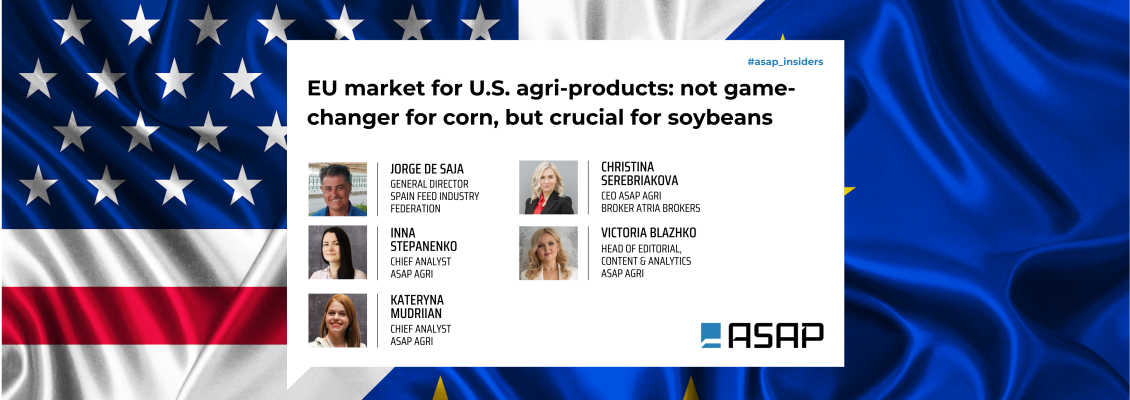
"Торгова війна 2.0" набирає обертів – ЄС оголосив про заходи у відповідь щодо імпорту зі США у відповідь на 25% глобальні мита на сталь та алюміній, які набули чинності 12 березня. Хоча остаточний список контрзаходів ще узгоджується, він може включати мита на американську кукурудзу та сою.
Як завжди, ASAP Agri уважно стежить за динамікою ринку, надаючи своєчасну аналітику про те, як зміни у торговельній політиці трансформують галузь. Наші аналітики дослідили потенційні наслідки для світових аграрних ринків і те, чи можуть українські експортери отримати конкурентну перевагу в цій ситуації.
Ексклюзивний експертний коментар для нас надав Хорхе де Саха, генеральний директор Іспанської федерації кормової промисловості, який поділився своїм баченням впливу змін на попит у Європі на зернові та олійні культури.

Інна Степаненко, провідний аналітик ASAP Agri

Катерина Мудріян, провідний аналітик at ASAP Agri
Мита ЄС у відповідь: що відбувається?
12 березня Єврокомісія оголосила, що запровадить швидкі та пропорційні контрзаходи проти імпорту зі США у відповідь на введення 25% мит адміністрацією Трампа.
Відповідь ЄС реалізовуватиметься у два етапи:
- 1 квітня: ЄС дозволить контрзаходам 2018 і 2020 років щодо США поновитися, відновлюючи мита на американські товари, щоб компенсувати втрати європейських експортерів сталі та алюмінію на 8 млрд євро.
- Середина квітня: Комісія запровадить нові мита на американський експорт, потенційно включаючи сою. Ці заходи будуть остаточно затверджені після консультацій із країнами-членами ЄС та зацікавленими сторонами.
Брюссель залишається відкритим до переговорів, але заявляє, що вживе необхідних заходів для захисту економічних інтересів ЄС.
Основне питання для аграрного ринку – чи зачеплять ці мита американську кукурудзу та сою?
Чому ЄС ніколи не був ключовим ринком для кукурудзи зі США?

Вікторія Блажко, керівник редакційного контенту та аналітики ASAP Agri
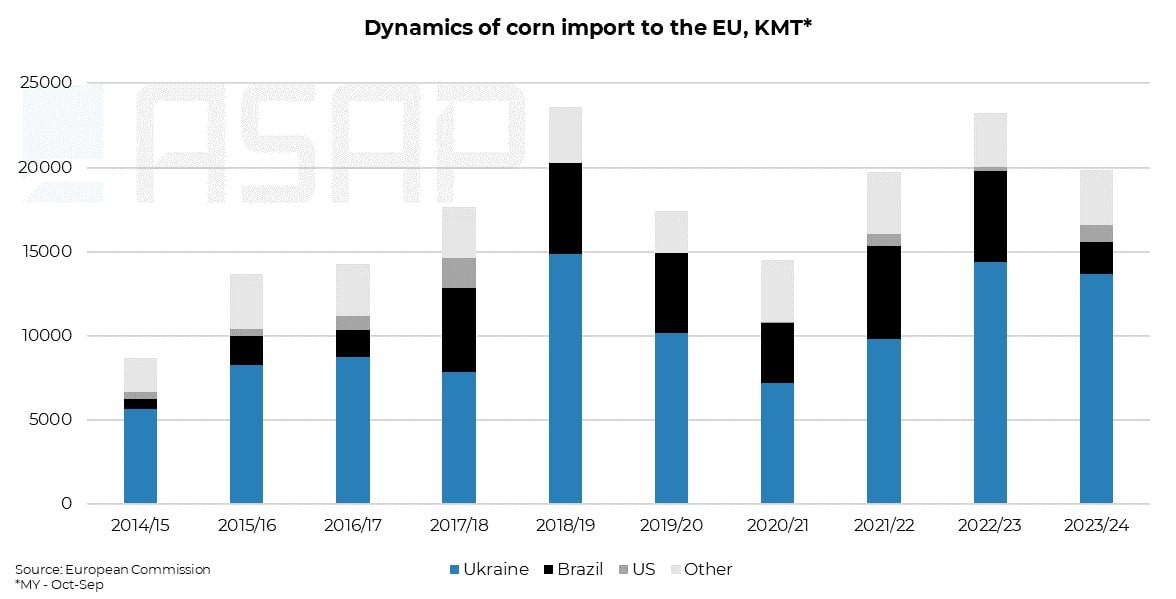
Історично склалося так, що ЄС не був значним покупцем американської кукурудзи. "Україна давно є і залишатиметься основним постачальником кукурудзи до ЄС завдяки географічній близькості, конкурентним цінам та преференційним торговим угодам. Логістична перевага дозволяє українській кукурудзі швидше і дешевше надходити на ринок ЄС, ніж американській", – зазначила Вікторія Блажко, керівник редакційного контенту та аналітики ASAP Agri.
Ще одним ключовим фактором є суворе регулювання ГМО-продукції в ЄС. Більшість кукурудзи у США є генетично модифікованою, тоді як ЄС надає перевагу не-ГМО. Навіть коли американська кукурудза імпортується, вона проходить складний процес біотехнологічного схвалення, що створює додаткові торговельні бар’єри.
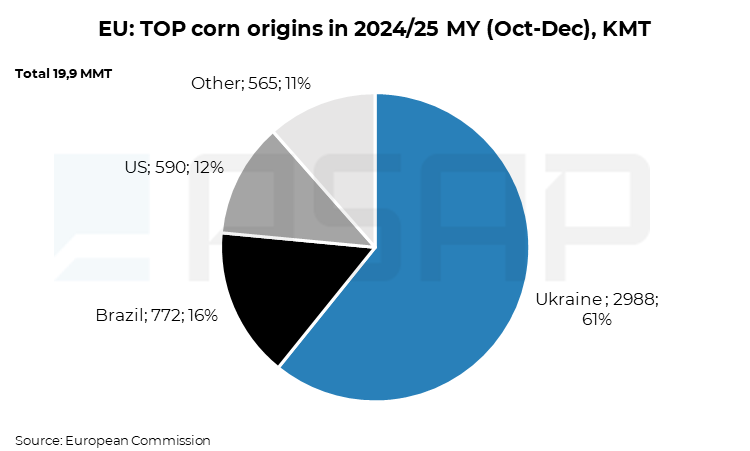
Однак цього року спостерігається виняток: ЄС, зокрема Іспанія, значно збільшив закупівлі американської кукурудзи, піднявши її частку в імпорті до 12%.
Але це радше короткострокове коригування ринку, ніж початок довгострокового тренду. Головним чинником цього зростання стала ціна. Іспанія, яка є однією з найгнучкіших країн ЄС у питанні ГМО, обрала економічну доцільність замість регуляторних обмежень. Коли довелося обирати між дорогою не-ГМО кукурудзою та дешевшою американською, покупці зробили прагматичний вибір," – пояснила Блажко.
Тим часом український експорт кукурудзи може отримати незначний імпульс, оскільки американська кукурудза втрачатиме конкурентоспроможність на ринку ЄС. Проте очікування повинні залишатися реалістичними.

Христина Серебрякова, CEO ASAP Agri
"Іспанія — найбільший імпортер американської кукурудзи цього сезону — вже відійшла від ринку після того, як забезпечила достатні запаси. Будь-які зміни в торгових потоках займуть певний час і навряд чи будуть різкими. Загалом Україна має певну можливість збільшити продажі до Іспанії в період з березня по червень, до того як на ринок вийде бразильська кукурудза", — зазначила Христина Серебрякова, CEO ASAP Agri та брокер Atria Brokers.

Хорхе де Саха, генеральний директор Іспанської федерації комбікормової промисловості
Однак рівень невизначеності щодо розвитку ситуації залишається високим.
"Я маю обґрунтовані сумніви, що ситуація розвиватиметься саме так, як було заявлено, з повними митами як з американського, так і з європейського боку. Ймовірно, буде знайдено певний компроміс. Але якщо ці мита все ж наберуть чинності, то так, це відкриє очевидну можливість для українського ринку кукурудзи, соняшнику та протеїнових культур у цілому", — зазначив Хорхе де Саха, генеральний директор Іспанської федерації комбікормової промисловості.
Він також наголосив, що процес ухвалення рішень щодо торговельних санкцій у ЄС є повільним і складним. "Може знадобитися від кількох тижнів до двох місяців, перш ніж ці мита будуть запроваджені. Тож можна припустити, що вони не набудуть чинності раніше кінця травня або початку червня — а можливо, і пізніше, враховуючи складність наших регуляцій", — додав де Саха.
Соєві боби: більш важливий аспект торгівлі США-ЄС
На відміну від кукурудзи, соєві боби становлять основний торговельний потік між США та ЄС.
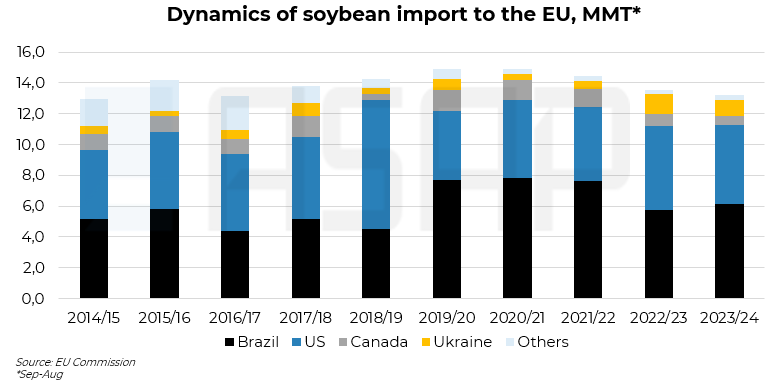
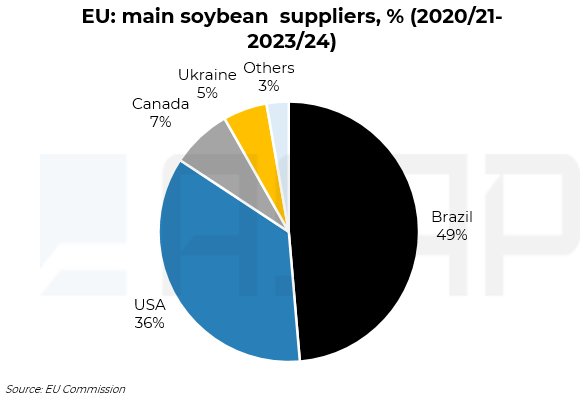
США стабільно посідають друге місце серед постачальників соєвих бобів до ЄС, займаючи близько 40% ринку впродовж останніх п’яти років. У першій половині 2024/25 МР (липень-грудень) США поставили в ЄС 3,5 млн т соєвих бобів, причому найбільші обсяги були відвантажені в жовтні-грудні — ключовий експортний період.
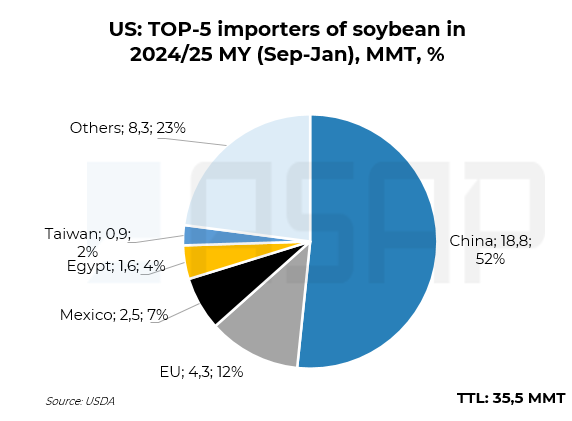
ЄС також став другим найбільшим імпортером американських соєвих бобів у 2024/25 МР (вересень-січень), закупивши 4,3 млн т, що склало 12% загального експорту США.
Якщо ЄС запровадить відповідні мита на американські соєві боби, Бразилія — яка збирає рекордний урожай — буде в ідеальній позиції, щоб замінити США як ключового постачальника.
Де Саха наголосив на можливих наслідках для європейських покупців:
"Бразилія вже бере ситуацію під контроль. Ціни на бразильську сою різко зросли за останні години [після оголошення про мита] і, ймовірно, продовжать зростати. Водночас весь ринок сировини перебуває у стані шоку. Європейським виробникам тваринницької продукції потрібен протеїновий корм, і якщо американська соя буде обкладена митами, нам доведеться шукати альтернативи. Це означає вищі витрати і, зрештою, дорожчі м’ясні продукти в Європі".
Україна також може скористатися можливістю розширити експорт соєвих бобів до ЄС, але ступінь її участі залежатиме від цінової ситуації та наявності пропозиції.
Наразі українські запаси сої перебувають під тиском, оскільки внутрішня переробка зросла, а експорт у першій половині сезону вже обмежив пропозицію.
Короткозора стратегія? Підхід ЄС піддається критиці
Хоча Україна може отримати певні вигоди, галузеві експерти вважають, що підходу ЄС до ситуації бракує стратегічного бачення. Де Саха розкритикував дії ЄС у відповідь на торговельні обмеження, зазначивши, що економічний прагматизм мав би відігравати більшу роль у процесі ухвалення рішень.
"Чесно кажучи, ЄС не проявив особливої стратегічності у цій ситуації. Поки ми тільки робимо заяви, Китай уже діє. Китайські мита запроваджені, що робить експорт американського м’яса до Китаю значно дорожчим. Іспанія — як і вся Європа, але особливо Іспанія — є важливим постачальником свинини на азійський ринок, зокрема до Китаю."
Він наголосив, що ЄС міг би використати ситуацію у своїх інтересах, виключивши сою та кукурудзу зі списку заходів у відповідь. "Якби ми навмисно не включили сою та кукурудзу до списку санкцій, наш експорт м’яса отримав би значну конкурентну перевагу на азійських ринках. Натомість американські конкуренти витісняються з Китаю, і ми могли б виграти. Якби економічна доцільність була на першому місці, ці товари не потрапили б під санкції, що підтримало б нашу м’ясну промисловість."
Проте рівень невизначеності залишається високим, і повний вплив нових мит ще не зрозумілий. "Ми стоїмо перед кількома тижнями невизначеності, і зараз саме час 'порибалити' на ринку у пошуках вигідніших угод. Чи перетвориться це на нагальну потребу чи просто спричинить зростання попиту, ще належить з’ясувати," — додав Де Саха.
Детальніший аналіз конкуренції на іспанському ринку кукурудзи представить Христина Сєребрякова, CEO ASAP Agri та брокер Atria Brokers, під час панельної дискусії на EuroGrainExchange 2025, що відбудеться 10–11 квітня в Бухаресті.
Тим часом Катерина Мудріян, головний аналітик з олійних та олій в ASAP Agri, стане ключовою спікеркою на конференції "Soybean and Meal Market", що відбудеться 27 березня в Києві. Вона надасть експертний аналіз глобальних тенденцій на ринку соєвого шроту та зростаючої ролі України в цьому сегменті.
Заплануйте дати!
Пов'язані продукти



Прокоментувати